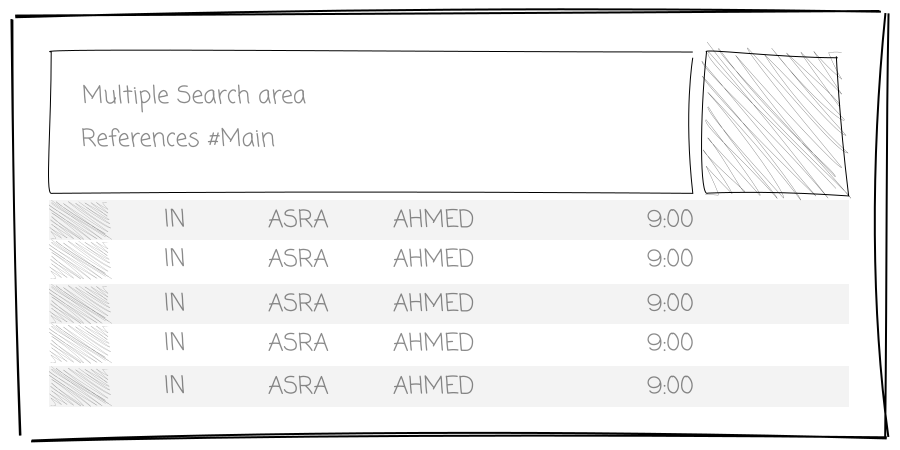
This is the moment you never want to happen. Months of User Experience interviews done, pages of UX wireframes approved, wonderful designs signed off, a front end built and everything is looking great until the demonstration to stakeholders and something seems, well, a bit "Spinny Wheely".
A well planned user experience, when built, is mostly loading screens and spinning wheels. They might be very well-designed loading screens, but you did not know you'd be seeing so much of them, and in such strange places.
When User Experience meets restrictions of back end and loses, it tends to lose badly. An experience which offers search tools and filters depends on those functions resolving at speed, and should they fail to do that, the experience will be frustration.
User Experience includes front end. User Experience includes back end, and if we are overseeing creating a User Experience, we need to get close to the parts of the team who are in back end development and understand what is possible, and how that impacts what we have designed.
Learning to "talk developer" is an important skill to have, and our empathy should help us respect the restrictions placed on the back end and work with them. We should take those restrictions seriously, rather than falling into the temptation of considering back end problems as being out of the scope of User Experience Design.
A User Experience Journey, and a UX design, needs to have a consideration of what is possible and how responsive the website or application will be. This, as much as anything, should guide our User Experience Design.